
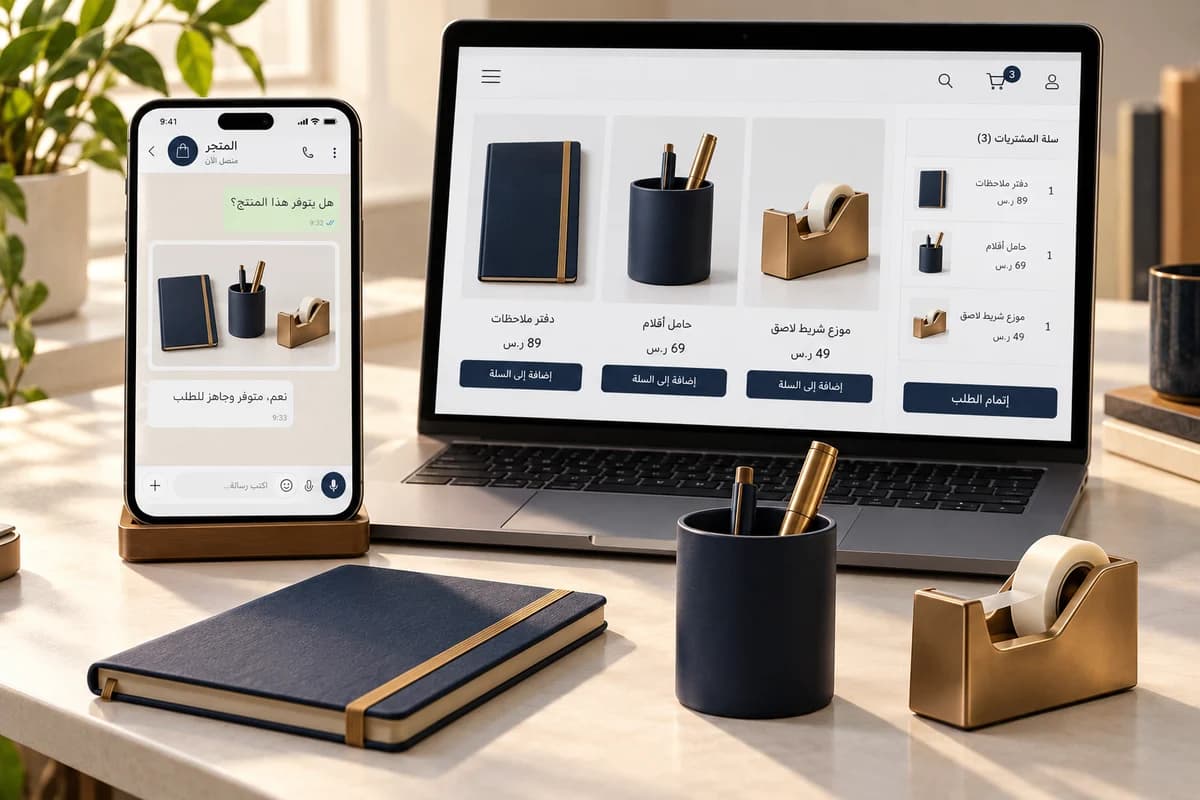
Start with where an order becomes authoritative
Use WhatsApp Business when buyers need a conversation or customization before deciding and a named person can follow each inquiry through to a recorded outcome. Use an online store when customers need product pages, a cart, and order records your team can review, or when price and stock cannot depend on someone remembering a chat. The two can work together: the store holds the product and order record while WhatsApp handles questions and service.
WhatsApp Business catalogs let businesses show products or services and share catalog items. WhatsApp’s cart guide says a cart sent to a seller is not a final order until the seller confirms it. Some catalog details, including whether a price can be shown, vary by country or account, so test the feature available to your business before designing a process around it. See WhatsApp’s catalog explanation and cart order steps.
| Operating situation | Start with WhatsApp when | Start with a store when | Failure to rehearse |
|---|---|---|---|
| The product needs explanation or customization | Questions are part of the decision and someone records the answer | Options, price, and availability can be explained on a product page | The chat agreement differs from the invoice or order record |
| Stock or price changes | An owner updates the catalog and hides unavailable items | You need one record that connects availability with orders | An order is accepted for unavailable stock or an old price |
| More than one seller or channel | One person handles inquiries, or the team has a clear shared log | Several people need the same order status | A message moves between accounts and nobody owns the reply |
| Payment and delivery | Staff can explain the next step after an order is confirmed | You need a cart, payment, confirmation, and delivery test | A sent message is mistaken for settled payment or completed delivery |
A hypothetical made-to-order gift workshop
Imagine a fictional workshop that personalizes gifts with a name. A buyer needs to send the name and requested date, and the seller must confirm feasibility before quoting. A conversation can fit the inquiry stage if the workshop records the choice, price, and confirmation together. If it starts accepting orders from several channels or must reserve stock and track shipping, the store should become the order record while chat remains a customer-service channel. This illustrates a workflow; it does not predict sales volume or results.
Rehearse the path before promoting it
- Name the owner who updates the title, image, price, and availability in each channel.
- Place a test order from the first question through confirmation or cancellation, and note where each detail is stored.
- Try an unavailable item, a change after sending, and an inquiry outside the usual reply window.
- Do not count messages as orders or a sent order as a received payment.
- If you use both channels, decide which record wins when the price or order status differs.
A store cannot repair poor follow-up on its own, and WhatsApp does not automatically create shared inventory or an executable returns process. Start with an operation your team can run and scope it through e-commerce development. For related decisions, see the online store readiness guide and platform comparison.
Apply this to your project?
Discuss your needs and current constraints so we can define the right next step and scope.