From a brand brief to a usable handoff
An identity is more than a logo file. It is a practical set of rules that helps another team produce consistent materials. Handoff varies by proposal, so record included items and separately scoped work before design starts.
Stages with acceptance points
- Brief: audience, offer, supportable distinctions, competitors, intended uses and constraints.
- Visual direction: present concepts with the reason for a direction; wait for written approval before proceeding.
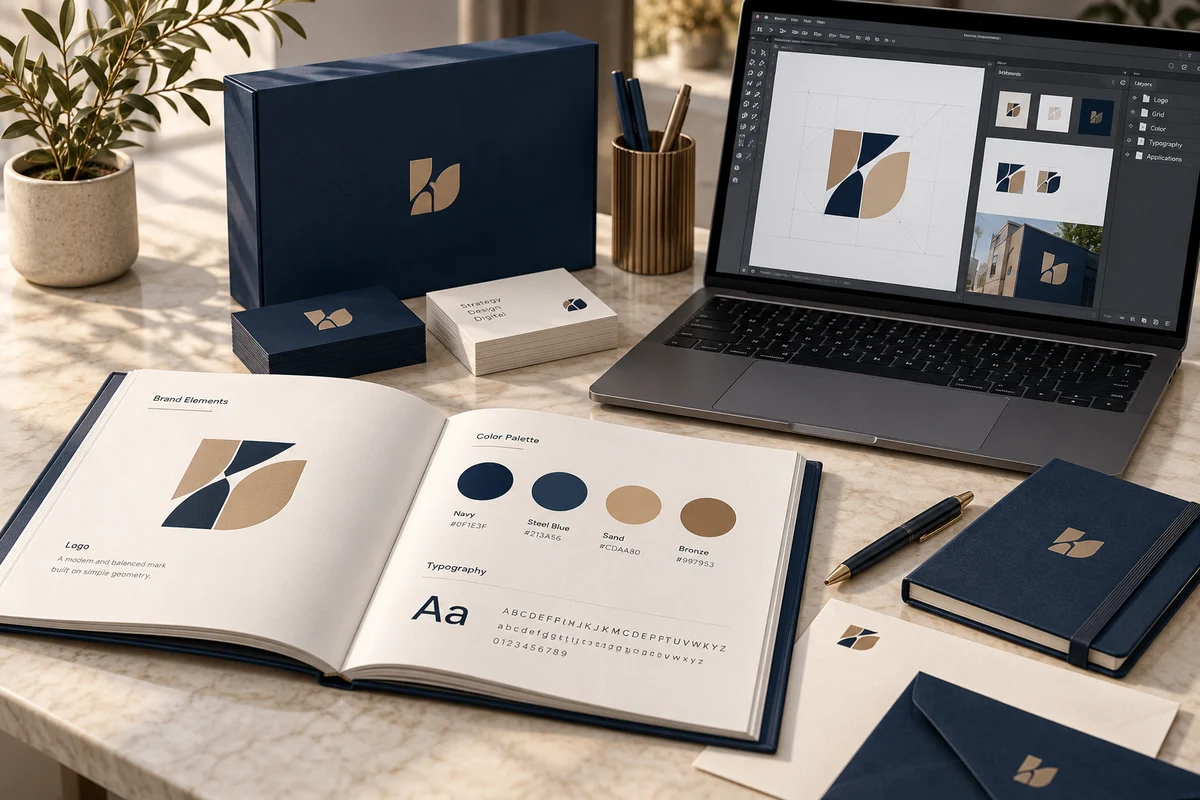
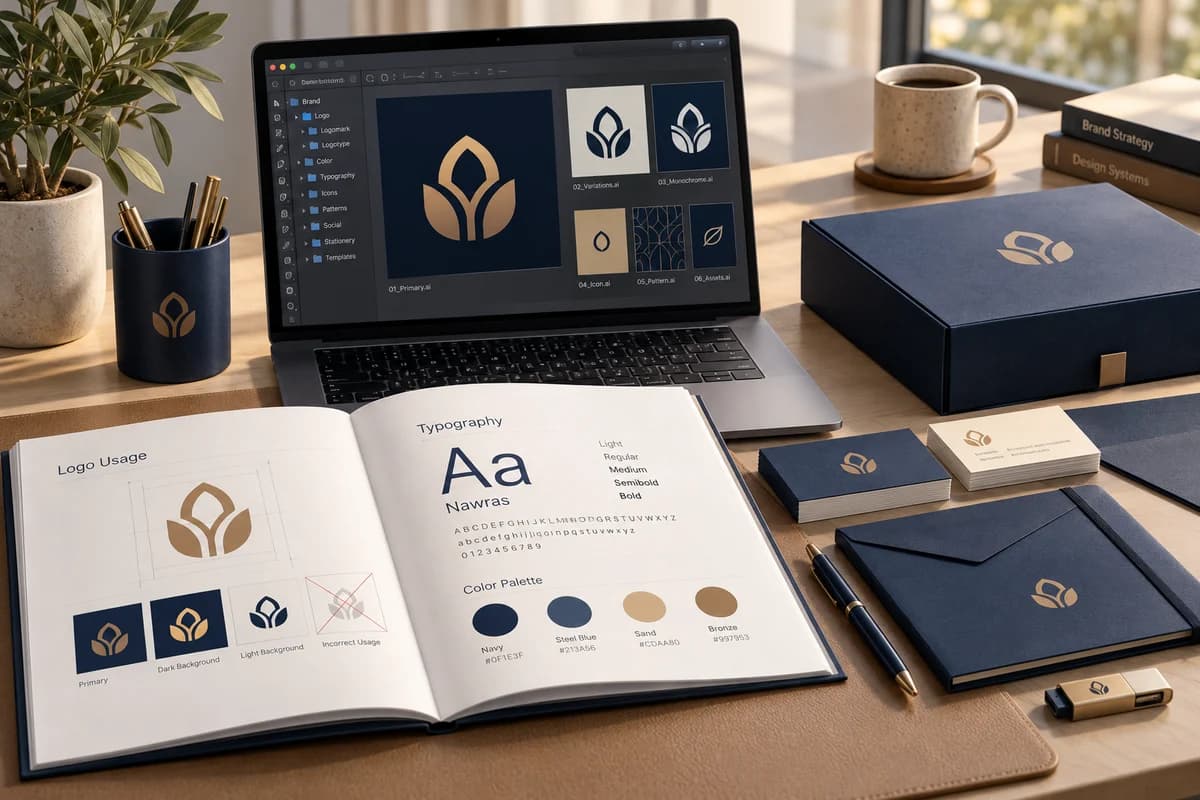
- Identity system: logo, colors, fonts, imagery or shapes, spacing and usage rules.
- Agreed applications: such as a card, homepage or presentation template, not an unlimited open list.
- Handoff and review: editable and export files, with a check that they open and work.
Handoff checklist
| Area | Check |
|---|---|
| Logo variants | Horizontal/vertical if needed, color, monochrome, light and dark backgrounds |
| Colors | HEX and RGB for digital use; CMYK only when print output is tested |
| Fonts | File names, source, license and an available team fallback |
| Formats | SVG or vector PDF when agreed, PNG for raster use |
| Usage guide | Clear space, minimum size, common errors and application examples |
| Rights | Pre-existing items, external components, and what transfers and when under the agreement |
A practical acceptance test: the marketing team opens the files, finds each format under a clear name, and applies colors and type to an Arabic and English template without guessing. This does not mean every application or editable source is automatically included; the written proposal controls. Keep feedback within the agreed review rounds rather than adding unscoped changes.
Before handoff, list the intended uses, languages and file formats, then name the approver on the client side. Ask the provider to explain each license or exception. Scope the deliverables through brand identity and UX services.